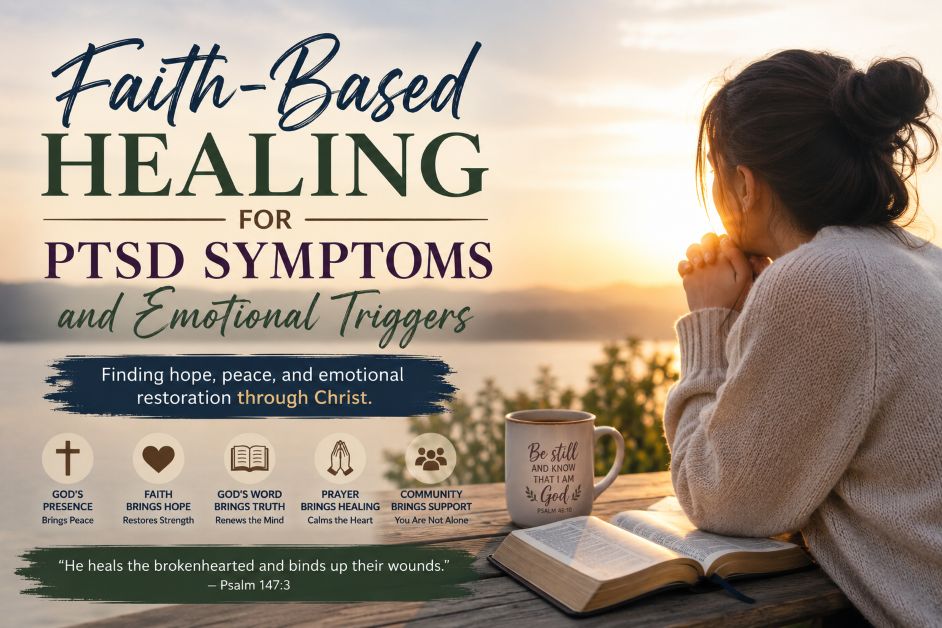
Living with PTSD can feel like carrying an invisible burden that affects every part of life. Flashbacks, anxiety, fear, nightmares, and unexpected emotional triggers often make even ordinary moments difficult. For many Christians, these struggles raise challenging questions: Does God understand my pain? Can faith truly help me heal? Is there hope beyond trauma?
The encouraging answer is yes. Faith-based healing for PTSD symptoms offers a pathway toward emotional, spiritual, and personal restoration by combining biblical truth, prayer, Christian community, and professional support. Faith does not replace evidence-based treatment; instead, it provides lasting hope, purpose, and strength throughout the healing journey.
Whether your trauma resulted from abuse, military service, accidents, loss, or another life-altering experience, God’s love remains constant. Through Christian PTSD healing, believers can discover renewed peace, resilience, and confidence while learning healthy ways to manage PTSD emotional triggers. This guide explores practical, biblical strategies for healing that encourage emotional recovery while honoring the importance of professional care.
What Is Faith-Based Healing for PTSD Symptoms?
Faith-based healing for PTSD symptoms is a Christ-centered approach to recovering from trauma that integrates biblical principles with healthy coping strategies and professional mental health care. Rather than viewing emotional wounds as signs of weak faith, this approach recognizes that trauma affects the mind, body, emotions, and spirit.
Healing begins by understanding that PTSD is a real condition. Symptoms such as intrusive memories, hypervigilance, panic attacks, sleep disturbances, and emotional numbness are common responses to overwhelming experiences. God invites believers to bring every burden before Him while also seeking wise counsel and appropriate treatment.
Understanding PTSD From a Christian Perspective
Trauma can alter the way people perceive safety, relationships, and even their understanding of God. Yet Scripture consistently reminds believers that God’s presence never leaves them during suffering. Through Christian trauma healing, individuals learn to rebuild trust, restore hope, and experience God’s comfort during life’s darkest moments.
Can Faith Support PTSD Recovery?
Faith provides spiritual strength that complements clinical care. Prayer, worship, Scripture meditation, and Christian fellowship encourage resilience while reinforcing healthy coping mechanisms. This balanced approach to faith-based PTSD recovery helps believers experience growth without ignoring the importance of therapy, counseling, or medical care when needed.
Healing Is Both Spiritual and Practical
Healing involves surrendering emotional pain to God while actively participating in the recovery process. Biblical healing for PTSD encourages believers to trust God’s promises while embracing practical tools that support emotional wellness.
Understanding PTSD Symptoms and Emotional Triggers
PTSD affects every individual differently, but certain symptoms appear frequently.
Common PTSD symptoms include recurring flashbacks, nightmares, anxiety, panic, irritability, emotional numbness, avoidance behaviors, difficulty concentrating, and constant alertness. These symptoms often intensify when emotional triggers remind someone of past trauma.
What Are Emotional Triggers?
Emotional triggers are situations, sounds, places, conversations, or memories that reactivate traumatic emotions. Sometimes triggers are obvious, while others appear unexpectedly.
Recognizing triggers is one of the first steps toward healing. Instead of responding with fear or shame, believers can learn healthier responses through healing emotional triggers through faith.
How Trauma Affects the Brain and Body
Trauma changes how the brain processes danger. The nervous system remains prepared for threats even after the original event has ended. This explains why individuals with PTSD may react strongly to situations that appear safe to others.
Understanding these biological responses helps remove unnecessary guilt while encouraging compassion toward oneself.
What the Bible Says About Trauma, Fear, and Healing
The Bible never minimizes suffering. Throughout Scripture, God consistently draws near to those who are hurting.
God’s Presence During Suffering
God promises His presence during every trial. Even when healing seems slow, believers are never abandoned. His faithfulness remains constant through every season of pain.
Finding Peace During Anxiety
Fear often accompanies trauma, but God continually calls His people to trust Him. Through prayer and meditation on Scripture, believers can experience peace that steadies anxious hearts.
Hope After Trauma
Trauma does not define identity or determine the future. Through Christ, healing and restoration remain possible regardless of past experiences.
God’s Promises for Emotional Healing
God desires restoration for wounded hearts. His promises encourage believers to continue trusting Him throughout their PTSD recovery through Christ, even when progress feels slow.
How Faith Supports PTSD Recovery
Faith becomes a daily source of strength during recovery.
Prayer During Triggering Moments
Prayer provides immediate connection with God during moments of distress. Honest conversations with Him help reduce isolation while strengthening hope.
Renewing the Mind Through Scripture
Scripture replaces fearful thoughts with God’s truth. Regular Bible meditation encourages emotional stability while renewing perspective.
Worship That Calms the Heart
Worship redirects attention from fear toward God’s character. Singing, listening to worship music, or quietly reflecting on God’s goodness often creates moments of peace during difficult days.
Trusting God While Healing
Healing rarely happens overnight. Trusting God‘s timing helps believers remain hopeful throughout the process of Christian emotional healing.
A Step-by-Step Faith-Based Healing Plan
Recovery becomes more manageable when approached intentionally.
Step 1: Recognize Your Triggers
Identify situations, environments, or memories that activate emotional distress.
Step 2: Pause and Ground Yourself
Practice slow breathing, observe your surroundings, and remind yourself that you are safe. Pair these grounding exercises with prayer.
Step 3: Pray Honestly
God welcomes authentic conversations. Express fears, frustrations, and hopes without pretending everything is fine.
Step 4: Replace Fear With Biblical Truth
When anxious thoughts arise, intentionally focus on Scripture that reminds you of God’s love, peace, and protection.
Step 5: Seek Christian Community
Supportive relationships provide encouragement, accountability, and understanding throughout recovery.
Step 6: Continue Professional Support
Christian counseling for PTSD and trauma-informed therapy can work alongside faith to promote long-term healing.
Step 7: Celebrate Small Victories
Every improvement deserves recognition. Recovery often happens gradually, and each positive step reflects meaningful progress.
Healing Emotional Triggers Through Faith
Managing emotional triggers requires patience, compassion, and consistent spiritual practices.
Managing Fear
Fear loses power as believers repeatedly surrender anxious thoughts to God through prayer and Scripture.
Healing Shame and Guilt
Trauma frequently produces feelings of shame that do not reflect God’s truth. Through Christ, believers receive forgiveness, acceptance, and renewed identity.
Overcoming Panic
Grounding techniques, slow breathing, and prayer help interrupt panic while reminding believers that God remains present.
Finding Emotional Safety in Christ
Developing intimacy with God creates a secure spiritual foundation that supports emotional stability during recovery.
Renewing Your Identity After Trauma
One of trauma’s greatest effects is distorted identity. Many survivors begin defining themselves by what happened instead of who God says they are.
Through identity in Christ, believers discover they are loved, valued, redeemed, and never abandoned. This renewed perspective gradually replaces trauma-based thinking with biblical truth.
Healing includes learning to see yourself through God’s eyes rather than through painful experiences.
Faith and Nervous System Healing
Trauma affects both the mind and body. Understanding this connection encourages balanced healing.
Healthy breathing exercises combined with prayer help calm the nervous system during stressful moments. Rest, proper sleep, regular worship, and moments of quiet reflection also contribute to emotional wellness.
This integration of faith and healthy habits supports spiritual healing while promoting physical recovery from chronic stress.
Signs of Healing and Recovery
Healing often appears gradually rather than dramatically.
Positive signs include:
- Increased peace
- Reduced anxiety
- Fewer emotional triggers
- Better sleep
- Healthier relationships
- Greater confidence
- Renewed joy
- Stronger prayer life
- Growing trust in God
- Increased emotional resilience
These improvements demonstrate that God continues working throughout the healing process.
Common Challenges During Recovery
Recovery is rarely linear.
Some days bring noticeable progress, while others feel discouraging. Setbacks do not mean failure. They simply reflect the reality of healing from trauma.
Maintaining hope after trauma requires remembering that God’s faithfulness remains unchanged regardless of temporary struggles.
When symptoms become overwhelming, seeking additional support demonstrates wisdom rather than weakness.
Daily Habits That Strengthen Healing
Consistent spiritual practices create a strong foundation for recovery.
Prayer Routine
Begin and end each day by honestly talking with God.
Scripture Meditation
Reflect daily on passages that emphasize hope, peace, courage, and God’s promises.
Journaling
Writing prayers and reflections helps process emotions while recognizing God’s ongoing work.
Gratitude
Intentionally noticing daily blessings shifts focus toward God’s faithfulness.
Christian Fellowship
Supportive believers offer encouragement, accountability, and practical assistance throughout recovery.
These habits encourage Christian resilience, strengthen faith, and reinforce healthy emotional patterns.
Reflection Questions for Your Healing Journey
Personal reflection encourages continued growth.
Ask yourself:
- What situations most frequently trigger emotional distress?
- How has God demonstrated His faithfulness during difficult seasons?
- Which biblical promises provide the greatest comfort?
- What practical step can I take today toward healing?
- How can I continue trusting God throughout my recovery?
Honest reflection often reveals progress that might otherwise go unnoticed.
Conclusion: Trusting God Through the Healing Journey
Faith-based healing for PTSD symptoms reminds believers that trauma does not have the final word. Although recovery may take time, God faithfully walks beside those who seek Him with sincere hearts.
Through Christian PTSD healing, prayer, Scripture, supportive community, and professional care, emotional wounds can gradually heal. Healing emotional triggers through faith allows believers to replace fear with hope, anxiety with peace, and despair with renewed confidence in Christ.
Every step forward—no matter how small—is evidence of God’s ongoing work. His grace is sufficient for every challenge, His presence remains constant through every struggle, and His promises provide lasting hope.
If you are walking through PTSD today, remember that you are not alone. Continue seeking God, remain connected to trusted Christian support, and embrace the healing journey one day at a time. Through faith-based healing for PTSD symptoms, God can restore peace, renew strength, and lead you toward a future filled with hope, healing, and lasting emotional restoration.