
A Christian emotional healing journey does not require pretending that pain never happened. It invites you to bring your pain honestly before Christ and allow His grace, truth, love, and presence to shape how you understand your story. Christian emotional healing can involve prayer, Scripture, forgiveness, healthy relationships, wise support, and steady spiritual growth.
An emotional wound can remain hidden for years. You may pray, attend church, read Scripture, serve others, and still carry grief, rejection, fear, shame, or disappointment. You may wonder why certain memories still hurt or why trusting God feels difficult.
Healing may not happen in one dramatic moment. It can unfold through ordinary days, difficult conversations, quiet prayers, changed perspectives, and faithful steps. The goal is not simply to feel better. It is to grow in hope and learn to live from your identity in Christ.
What Is a Christian Emotional Healing Journey?
A Christian emotional healing journey is a process of bringing emotional pain and wounded beliefs before God while learning to trust Christ and live according to biblical truth.
Healing from emotional wounds does not mean forgetting the past or denying what happened. It means allowing God to meet you within your real circumstances and help you respond with greater truth, freedom, wisdom, and hope.
A Christian healing journey may include grief, forgiveness, repentance, renewed thinking, prayer, worship, community, and professional counseling when needed.
Emotional Healing Is a Journey, Not Always a Single Moment
Some people expect immediate relief. Yet emotional healing may take time. Old fears may return. Difficult memories may surface again. You may have days when you feel strong and other days when you feel tired.
That does not automatically mean you have failed.
A healthy Christian emotional healing process can include gradual changes in how you think, respond, relate, pray, and trust God.
Your Pain Does Not Have to Become Your Identity
Rejection does not have to define you. Failure does not have to define you. Abandonment does not have to define you.
This is especially important for Christian identity healing from emotional abandonment. When someone has experienced rejection or loss, it can become easy to believe, “I am unwanted” or “I cannot trust anyone.” Christ offers a different foundation for identity.
Where Emotional Wounds Often Begin
Emotional wounds can develop through many experiences. These may include rejection, betrayal, loss, family conflict, broken relationships, unmet expectations, failure, or prolonged stress.
Rejection and Abandonment
Repeated rejection can affect how you see yourself and others. You may become afraid of being vulnerable or feel that you must earn someone’s acceptance.
God’s love provides a different foundation. Your value does not depend on whether another person recognized it.
Betrayal and Broken Trust
Betrayal can make trust difficult. You may become guarded even in relationships that are safe.
Part of emotional restoration through Christ involves learning to recognize what happened without allowing that experience to control every future relationship.
Shame, Guilt, and Past Mistakes
Healthy conviction can lead to repentance and change. Shame can make you believe that your mistake is your identity.
Learning how to stop defining yourself by your past means separating what you did from who you are becoming in Christ.
What Does the Bible Say About Emotional Healing?
Scripture repeatedly presents God as near to people who are hurting. Psalm 34:18 says that the Lord is near to the brokenhearted. Psalm 147:3 describes God as healing the brokenhearted and binding their wounds.
Jesus also invites the weary to come to Him in Matthew 11:28–30.
These passages do not promise that every painful circumstance will disappear immediately. They point toward God’s presence, compassion, grace, and faithfulness.
Jesus Is Near to the Brokenhearted
Healing emotional wounds with God begins with recognizing that you do not have to hide your pain from Him.
Prayer can include grief, confusion, disappointment, and honest questions. You do not need perfect words.
God Meets Us in Suffering
A Christian healing for emotional wounds does not require believing that suffering is good in itself. Instead, Christian hope rests in God’s ability to remain present and work within difficult circumstances.
This matters when learning how to respond to suffering without losing faith.
Your Past Does Not Have to Become Your Identity
Through Christ, your story is not limited to your worst moment.
Learning how to stop defining yourself by your past involves allowing Scripture to challenge the labels you have placed on yourself.
The 8 Stages of a Christian Emotional Healing Journey
1. Become Honest About What Hurts
Start by naming what is happening inside you.
Ask:
- What happened?
- What am I feeling?
- What still hurts?
- What am I afraid will happen again?
This practice develops Christian self-awareness in spiritual growth. Awareness is not self-absorption. It helps you bring your real experience before God.
2. Bring Your Pain Into God’s Presence
You can bring your emotions to God through prayer, Scripture, journaling, worship, and silence.
Learning how to be still before God can create space to notice what your heart has been carrying. You may also discover how to sit with God in silence without needing to immediately solve every problem.
3. Identify the Beliefs Formed by the Wound
Pain can influence what you believe about yourself, other people, and God.
You may think:
- “I cannot trust anyone.”
- “I am unworthy.”
- “God has abandoned me.”
- “I must control everything.”
- “I have to earn God’s approval.”
Learning how to recognize false beliefs about God can be an important part of spiritual growth.
If you wonder why is trusting God so difficult, consider whether past experiences have shaped your expectations of God.
4. Replace False Beliefs With Biblical Truth
Once you recognize a false belief, compare it with Scripture.
Instead of “I am abandoned,” remember God’s promises of His presence. Instead of “I must control everything,” remember that trust involves releasing outcomes to God.
This process of renewing your mind supports emotional healing and faith while helping you develop a stronger Christian identity.
5. Release What You Were Never Meant to Carry Alone
Healing can involve releasing resentment, fear, shame, control, and unhealthy dependence.
Learning how to release unhealthy emotional attachments does not mean becoming cold or uncaring. It means allowing God to become the foundation of your identity and security.
It can also help to examine what are spiritual idols in everyday life. Anything that becomes the primary source of identity, security, approval, or control can compete with wholehearted trust in God.
6. Practice Forgiveness Without Denying Boundaries
Forgiveness does not mean saying that harmful behavior was acceptable. It does not always mean reconciliation or removing healthy boundaries.
Forgiveness places justice and the future in God’s hands while helping you release the burden of continued resentment.
7. Receive Grace Instead of Performing for Healing
Some Christians unintentionally turn healing into another spiritual performance.
They may think they need to pray enough, worship enough, forgive quickly enough, or feel peaceful enough to prove that their faith is strong.
Resting in grace beyond religious striving offers a different approach.
You can receive God’s grace while still growing. This is part of learning how to let go of spiritual self-effort. Healing is not a test you must pass to earn God’s love.
8. Walk Forward With Christ Even While Some Pain Remains
You may still have difficult memories while becoming healthier in how you respond to them.
This is part of learning what does it mean to live from Christ’s life. Your emotional journey becomes connected to discipleship, obedience, hope, and daily dependence on Jesus.
It also raises an important question: what does it mean to follow Jesus through suffering? It means continuing to trust and obey Christ even when circumstances remain difficult.
How Worship, Prayer, and Scripture Support Emotional Healing
How worship changes your response to life is an important part of emotional growth. Worship redirects your attention toward God’s character without requiring you to deny your pain.
Prayer gives your emotions somewhere to go. Scripture gives your thoughts a foundation. Silence can help you listen before reacting.
Learning Christian listening before responding can also change relationships. Instead of immediately reacting from fear or hurt, you can pause, pray, listen, and respond with wisdom.
This is part of Christian discernment in everyday situations.
Learning to Let Go of What Keeps You Stuck
Healing sometimes requires releasing old patterns of control.
If you wonder why is letting go so hard spiritually, consider how strongly we often want certainty. We may want to know what will happen, how another person will respond, or when healing will be complete.
Faith does not require having every answer.
You can learn how to stop fighting God’s will by surrendering the need to control every outcome. This is what what does spiritual surrender look like in everyday life: trusting God while continuing to take responsible, faithful action.
You can also learn what does it mean to leave the old life behind without denying your history. In Christ, the past can become part of your testimony without becoming your master.
Finding God in Ordinary Circumstances
Emotional healing becomes visible in ordinary life.
Practice Christian patience with difficult circumstances when situations move slowly. Practice Christian response to inconvenience when plans change. Develop a Christian perspective on ordinary circumstances by looking for God’s presence in daily responsibilities.
You can also cultivate Christian gratitude for ordinary blessings. A quiet morning, a meaningful conversation, a meal with family, a moment of rest, or a simple answered prayer can become reminders of God’s goodness.
Learning Christian handling of unmet expectations can also strengthen emotional resilience. Not every disappointment needs to become a spiritual crisis.
Emotional Healing, Suffering, and Hope in Christ
Some seasons involve suffering that does not resolve quickly.
The spiritual meaning of death to self is not self-hatred. It is surrendering self-rule and learning to place Christ at the center.
Likewise, what is resurrection life in Christ points toward newness of life. Your pain does not have to have the final word.
You can ask God for strength to remain faithful while you wait.
If you are learning why do Christians fear freedom, remember that freedom in Christ can feel unfamiliar when control has become a source of security. God’s grace invites you into trust rather than bondage to fear.
You can also learn what does it mean to worship God freely—not as a performance, but as a response to who God is.
A Daily Christian Emotional Healing Practice
Try this simple routine:
- Be still. Spend a few quiet minutes be still before God.
- Name the emotion. Identify what you feel without condemning yourself.
- Identify the belief. Ask what story you are telling yourself.
- Read Scripture. Find biblical truth that speaks to that belief.
- Surrender the outcome. Give the situation to God.
- Choose one faithful response. Take one practical step.
- Give thanks. Notice one blessing from the day.
This practice supports Christian self-awareness in spiritual growth, strengthens Christian gratitude for ordinary blessings, and helps you develop a more consistent relationship with Christ.
When Christian Emotional Healing May Include Counseling or Community
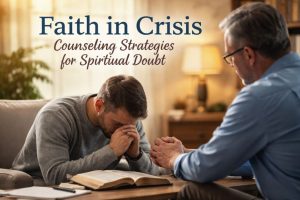
You do not have to walk through deep emotional pain alone. Trusted Christian friends, pastors, mentors, support groups, and qualified counselors can provide meaningful support.
Professional counseling may be especially appropriate when emotional distress is persistent, severe, connected to trauma, or affecting daily functioning.
Seeking support is not a sign of weak faith. Wise Christian care can work alongside prayer, Scripture, worship, and community.
Restoring Hope in Christ: You Are Still Becoming
A Christian emotional healing journey is not measured only by whether painful memories disappear. Healing may also become visible through greater honesty, healthier boundaries, deeper trust, renewed thinking, forgiveness, patience, gratitude, and hope.
You can learn how to be still before God, release what you cannot control, and receive His grace for the day in front of you.
You can learn how to release unhealthy emotional attachments, recognize false beliefs, and stop allowing the past to determine your identity.
Most of all, you can keep returning to Christ.
Your healing does not need to become another form of striving. Resting in grace beyond religious striving means learning to receive what God freely gives while continuing to walk faithfully with Him.
Bring Him your pain. Bring Him your questions. Bring Him your disappointments. Bring Him your hopes.
Then take the next faithful step.
Christ is not finished with your story.